Planning to make a film? Know, who will be there in your crew.
A film crew is a group of people, hired by a production company, for the purpose of producing a film or motion picture.

The crew is distinguished from the cast as the cast are understood to be the actors who appear in front of the camera or provide voices for characters in the film. The crew is also separate from the producers as the producers are the ones who own a portion of either the film company or the film's intellectual property rights. A film crew is divided into different departments, each of which specializes in a specific aspect of the production. Film crew positions have evolved over the years, spurred by technological change, but many traditional jobs date from the early 20th century and are common across jurisdictions and film-making cultures.
Director

A film director is a person who directs the making of a film. The director most often has the highest authority on a film set. Generally, a film director controls a film's artistic and dramatic aspects and visualizes the screenplay (or script) while guiding the technical crew and actors in the fulfillment of that vision. The director has a key role in choosing the cast members, production design, and the creative aspects of filmmaking. Under European Union law, the director is viewed as the author of the film.
The film director gives direction to the cast and crew and creates an overall vision through which a film eventually becomes realized, or noticed. Directors need to be able to mediate differences in creative visions and stay within the boundaries of the film's budget. There are many pathways to becoming a film director. Some film directors started as screenwriters, cinematographers, film editors or actors. Other film directors have attended a film school. Directors use different approaches. Some outline a general plotline and let the actors improvise dialogue, while others control every aspect, and demand that the actors and crew follow instructions precisely. Some directors also write their own screenplays or collaborate on screenplays with long-standing writing partners. Some directors edit or appear in their films, or compose the music score for their films.

Script supervisor

Also known as the continuity person, the script supervisor keeps track of what parts of the script have been filmed and makes notes of any deviations between what was actually filmed and what appeared in the script. They make notes on every shot, and keep track of props, blocking, and other details to ensure continuity between shots and scenes. An important part of a script supervisor's job is to make sure that actors' movements, the directions they are looking in a shot, particularly when speaking to or responding to another actor, plus the positions of props they are using and every thing else matches from shot to shot. If there is an apparent mismatch, the director must be informed immediately so that it can be reshot before the lighting setup is changed or at least before the location is wrapped and the set is struck. Not only does the job of script supervisor require a great deal of awareness and meticulous note-taking skills, it also requires much diplomacy to advise the director that they may have a problem editing something just recorded. The script supervisor is also in charge of providing the "official" scene numbers and take numbers to the second camera assistant (clapper loader in some countries) for the slate, as well as to the sound mixer, and to clearly note which take the director has chosen to be used (as a "print," in film terms) in the finished product. All of this information is then relayed to the editor every day after shooting has wrapped in the form of copies made of both the script supervisor's notes as well as their matching script pages.

A film producer creates the conditions for film-making. The producer initiates, coordinates, supervises, and controls matters such as fund raising, hiring key personnel, and arranging for distributors. The producer is involved throughout all phases of the film making process from development to completion of a project. There may be several producers on a film who may take a role in a number of areas, such as development, financing or production.
Executive producer(EP)
- An executive producer (EP) is a producer who was not involved in the technical aspects of the film-making process in the original definition, but has played a financial or creative role in ensuring that the project goes into production.[1] Today, however, the title has become ambiguous,[2] particularly in feature films. Since the 1980s, it has become increasingly common for the line producer to be given the title of executive producer, while the initiating producer takes the "produced by" credit. On other projects, the reverse happens, with the line producer taking the "produced by" credit. So the two credits have become effectively interchangeable, with no precise definition.
Line producer
- The line producer is the liaison between the studio or producer and the production manager, responsible for managing the production budget. The title is associated with the idea that they are the person who is "on the line" on a day-to-day basis, and responsible for lining up the resources needed.
Production assistant
- Production assistants, referred to as PAs, assist in the production office or in various departments with general tasks, such as assisting the first assistant director with set operations.
Unit manager
- The unit manager fulfills the same role as the production manager but for secondary "unit" shooting. In some functional structures, the unit manager subsumes the role of the transport coordinator.
Production coordinator
- The production coordinator is the information nexus of the production, responsible for organizing all the logistics from hiring crew, renting equipment, and booking talent. The PC is an integral part of film production.
- Production accountant
Production accountants manage the money and ensure the production comes in on budget and everyone gets paid. The industry is notorious for unusual accounting methods which are collectively labelled Hollywood accounting. Production accountants are often assisted by assistant accountants, sometimes called clerks, responsible for accounts receivable, accounts payable and payroll.

 Casting director

- First assistant camera
- The first assistant camera, 1st AC or focus puller, is responsible for keeping the camera in focus as it is shooting, as well as building the camera at the beginning of the day and taking it apart at the end. They also thread the film when a new magazine is loaded.
- Second assistant camera
- The second assistant camera, 2nd AC or Clapper loader, operates the clapperboard commonly referred to in the United States as a "Slate" at the beginning of each take and loads the raw film stock or blank videocassette into the camera magazines between takes, if there is no additional specifically designated film loader. The 2nd AC is also in charge of overseeing the meticulously kept notebooks that record when the film stock is received, used, and sent to the lab for processing. Additionally, the 2nd AC oversees organization of camera equipment and transport of the equipment from one shooting location to another.
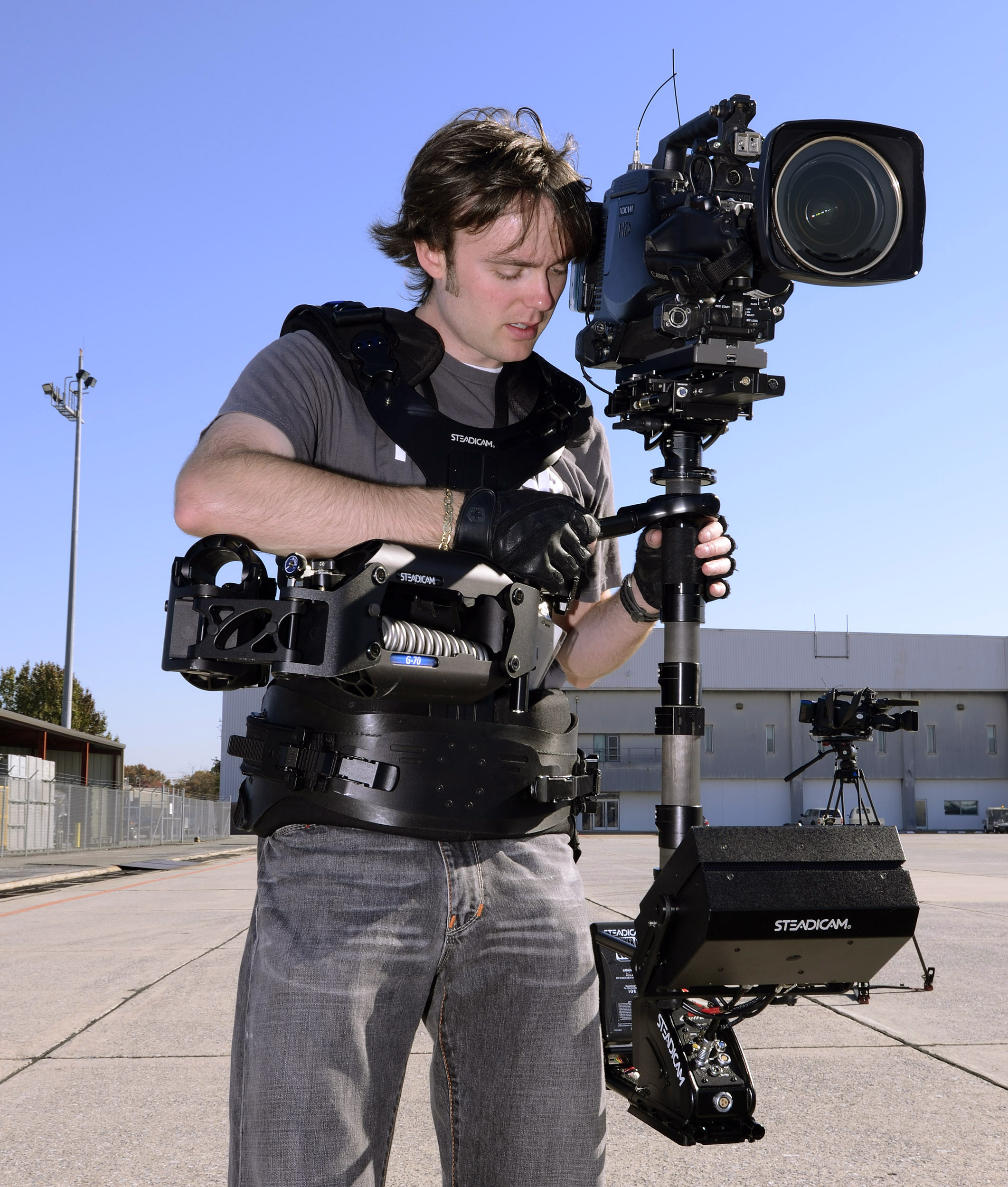 Steadicam operator
- A steadicam operator is someone who is skilled at operating a Steadicam (trademark for a camera stabilization rig). This person is usually one of the camera operators on the production.
- Motion control technician/Operator
- This technician operates a motion control rig, which essentially is a 'camera robot' able to consistently repeat camera moves for special effects uses. Motion control rigs are typically rented with an experienced operator.
- Gaffer
- The gaffer is the head of the lighting department, responsible for the design of the lighting plan for a production. Sometimes the gaffer is credited as chief lighting technician.
- Best boy (lighting)
- The best boy is the chief assistant to the gaffer. They are not usually on set, but dealing with the electric truck, rentals, manpower, and other logistics.
- Lighting technician / Electrics
- Also called Electrics or Lamp Operators, Lighting technicians are involved with setting up and controlling lighting equipment and temporary power distribution on set.
- Grip
- Grips are trained lighting and rigging technicians. Their main responsibility is to work closely with the electrical department to put in the non-electrical components of lighting set-ups required for a shot, such as flags, overheads, and bounces. On the sound stage, they move and adjust major set pieces when something needs to be moved to get a camera into position. In the US and Canada they may belong to the International Alliance of Theatrical Stage Employees.
-
- Key grip
- The key grip is the chief grip on a set, and is the head of the set operations department. The key grip works with the director of photography to help set up the set and to achieve correct lighting and blocking.
- Best boy (grip)
- The best boy is chief assistant to the key grip. They are also responsible for organizing the grip truck throughout the day.
- Dolly grip
- The grip in charge of operating the camera dollies and camera cranes is called the dolly grip. They place, level, and move the dolly track, then push and pull the dolly, and usually a camera operator and camera assistant as riders.
- Grips
- Grips report to the key grip and are responsible for lifting heavy things and setting rigging points for lights.
- Sound Grip
- Similar to grips, in regards to the kinds of role they play on set; however, sound grips will also report to the production sound mixer and serve as a critical link between these departments.
- Production sound mixer
- The production sound mixer (or sound recordist) is the head of the Sound Department on location and is responsible for the operation of the audio Mixer and Recorder(s) which receive feeds from the microphones on set. It is their responsibility to decide how they will deploy their team to capture the sound for each shot, select which microphones will be used for each setup, mix audio from all of the microphones in real time into a "mix track" that will be used while viewing rushes and during the edit, and sometimes in the final film, and to maintain logs of audio related issues for post production. The sound mixer is considered a department head, and is thus completely responsible for all aspects of production sound.
- Boom operator
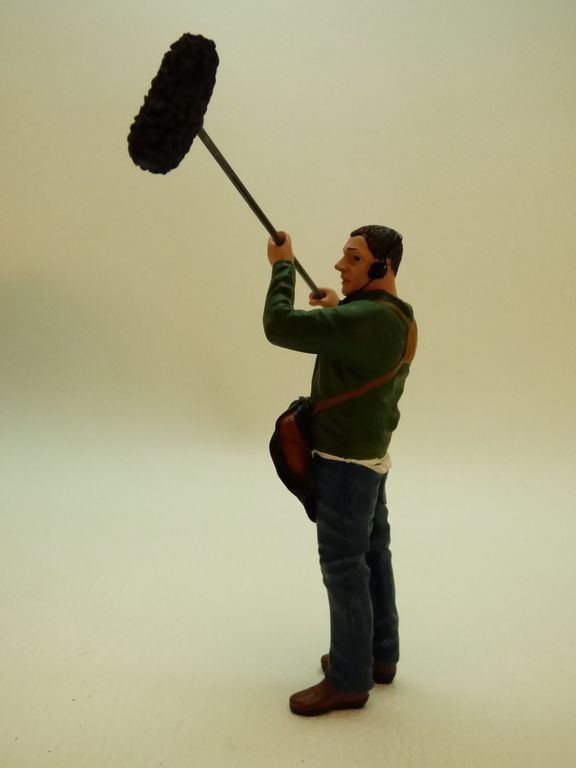
- The boom operator, first assistant sound or "1st AS", is responsible for utilising microphones on the end of boom poles (lightweight telescopic poles made of aluminium, or more commonly, carbon fibre) held above actor's heads during a scene to capture dialogue. It is also their responsibility to relay information from the "floor" back to the production sound mixer regarding upcoming shots, troublesome noises that the mixer will need to be made aware of if they can't be silenced, and for mounting radio microphones on actors. In France, the boom operator is called the Perchman.
- Second assistant sound
- The second assistant sound, sound utility technician, or "2nd AS", is the assistant to the boom operator and is responsible for moving and preparing sound equipment for use around the set while the boom op watches rehearsals and prepares for the next shot, as well as handling wireless audio feeds to the director, script supervisor and producers, and laying carpet and other sound dampening materials in locations with problematic floors or a troublesome acoustic. In addition, the 2nd AS is regularly called upon to operate a second boom in scenes with a larger number of actors or where actors are physically spaced too far apart for the 1st AS to cover all of the dialogue with one microphone. The 2nd AS also regularly aids in the radio mic'ing of cast when there are a large number of actors in a scene. The term "sound utility technician" is now considered an outdated term by BECTU in the UK and 2nd AS is preferred, with sound utility technician as a role being omitted from recent versions of the rate card.[2] The role is sometimes informally known as a "cable wrangler" or "cable boy".
- Production designer
- The production designer is responsible for creating the visual appearance of the film – settings, costumes, character makeup, all taken as a unit. The production designer works closely with the director and the director of photography to achieve the look of the film.
- Art director
- The art director reports to the production designer, and more directly oversees artists and craftspeople, such as the set designers, graphic artists, and illustrators who give form to the production design as it develops. The art director works closely with the construction coordinator and key scenic artist to oversee the aesthetic and textural details of sets as they are realized. Typically, the art director oversees the budget and schedule of the overall art department. On large-budget productions with numerous sets and several art directors, one might be credited as supervising art director or senior art director.
- Standby art director
- In the organizational system used in the UK and Ireland, the standby art director monitors the art department's work on set during filming on behalf of the production designer. They work closely with the standby painters and standby carpenters, and co-ordinate any changes to the set during filming. In the North American system, this work is shared between the props master and the on-set dresser.
- Assistant art director
- The first, second and third assistant art directors carry out the instructions of the art director. Their work often involves measuring locations and collecting other pertinent information for the production designer. Sometimes a set designer is also the first assistant art director. In this capacity, they manage the workflow and act as the foreman of the drawing office.
- Set designer
- The set designer is the draftsman, often an architect, who realizes the structures or interior spaces called for by the production designer.
- Illustrator
- The illustrator draws or paints visual representations of the designs to communicate the ideas imagined by the production designer. Illustrators are sometimes credited as concept artists.
- Graphic artist
- The graphic artist is responsible for the design and creation of all graphic elements, including: signs, billboards, posters, logos, nameplates, and automotive-wrapping — that are created specifically for the film. They will often create several versions of a design, the preferred of which then being chosen by the production designer. On certain productions, they may also be employed, under the direction of the props master, in the creation of small, printed items,
- such as fliers, receipts, bills of sale, etc.
- Costume Designer

- The costume supervisor works closely with the designer. In addition to helping with the design of the costumes, they manage the wardrobe workspace. They supervise construction or sourcing of garments, hiring and firing of support staff, budget, paperwork, and department logistics. Also called the wardrobe supervisor, although this term is used less and less.
- Costume supervisor
- The costume designer is responsible for all the clothing and costumes worn by all the actors that appear on screen. They are also responsible for designing, planning, and organizing the construction of the garments down to the fabric, colors, and sizes. The costume designer works closely with the director to understand and interpret "character", and counsels with the production designer to achieve an overall tone of the film. In large productions, the costume designer will usually have one or more assistant costume designers.
- Cutter
- A costume technician who fits or tailors costumes, usually on-set. They might also be called fitter, seamstress or tailor. Some celebrity actors have favorite cutters, and larger productions may hire several and have them on set at the same time, particularly in period film projects that might have complicated or expensive extras wardrobe.
Hair and make-up
- Some actors or actresses have personal makeup artists or hair stylists.
- Key make-up artist
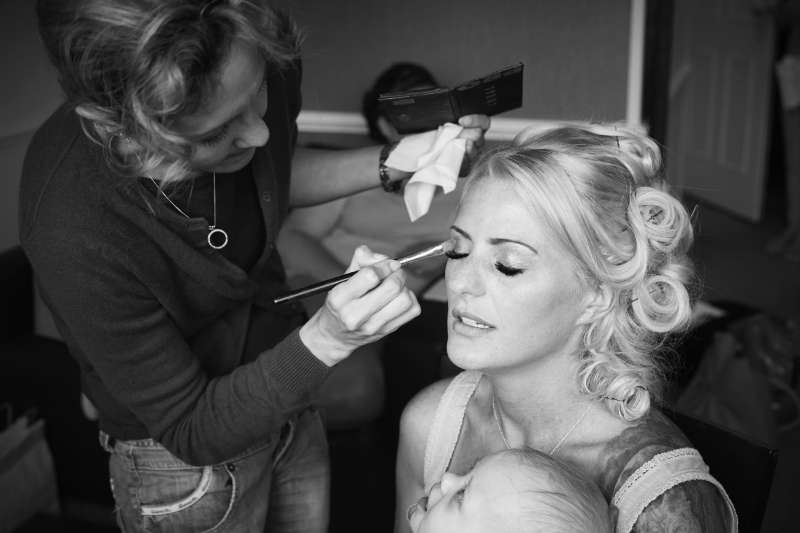
- The key makeup artist is the department head that answers directly to the director and production designer. They are responsible for planning makeup designs for all leading and supporting cast. Their department includes all cosmetic makeup, body makeup and if special effects are involved, the key make-up artist will consult with a special effects makeup team to create all prosthetics and SFX makeup in a production. It is common that the key makeup artist performs makeup applications on lead cast, with assistance, and allows other crew members to work with supporting and minor roles. The key makeup artist will normally execute especially complicated or important makeup processes that are to be featured on camera.
- Special make-up effects Artist (SFX makeup)
- A special effects make-up artist works with live models or structures in the entertainment industry, applying make-up effects or prosthetics. May be an own department that answers directly to the director and production designer or reports to the Key make-up artist.
- Make-up supervisor
- The make-up supervisor is a supporting position that normally reports to the key makeup artist to assist in running the makeup department. Make-up supervisors typically handle production matters and generally serve the needs of senior artists. Makeup supervisors rarely do makeup themselves. Their duties can include keeping a record of makeup continuity, handing the scheduling of makeup teams and providing for the general needs of the makeup department. They are expected to be a connection between the makeup department and the rest of the production departments, making sure that makeup supplies, production assistants or electricians are on hand when needed.
- Make-up artist
- Make-up artists work with makeup, hair and special effects to create the characters look for anyone appearing on screen. They assist and report to the key make-up artist.
- Key hair
- The key hair is the department head that answers directly to the director and production designer. The key hair will normally design and style the hair of lead actors.
- Hair stylist
- The hair stylist, is responsible for maintaining and styling the hair, including wigs and extensions, of anyone appearing on screen. They assist and report to the key hair.
-
Special Effects
-
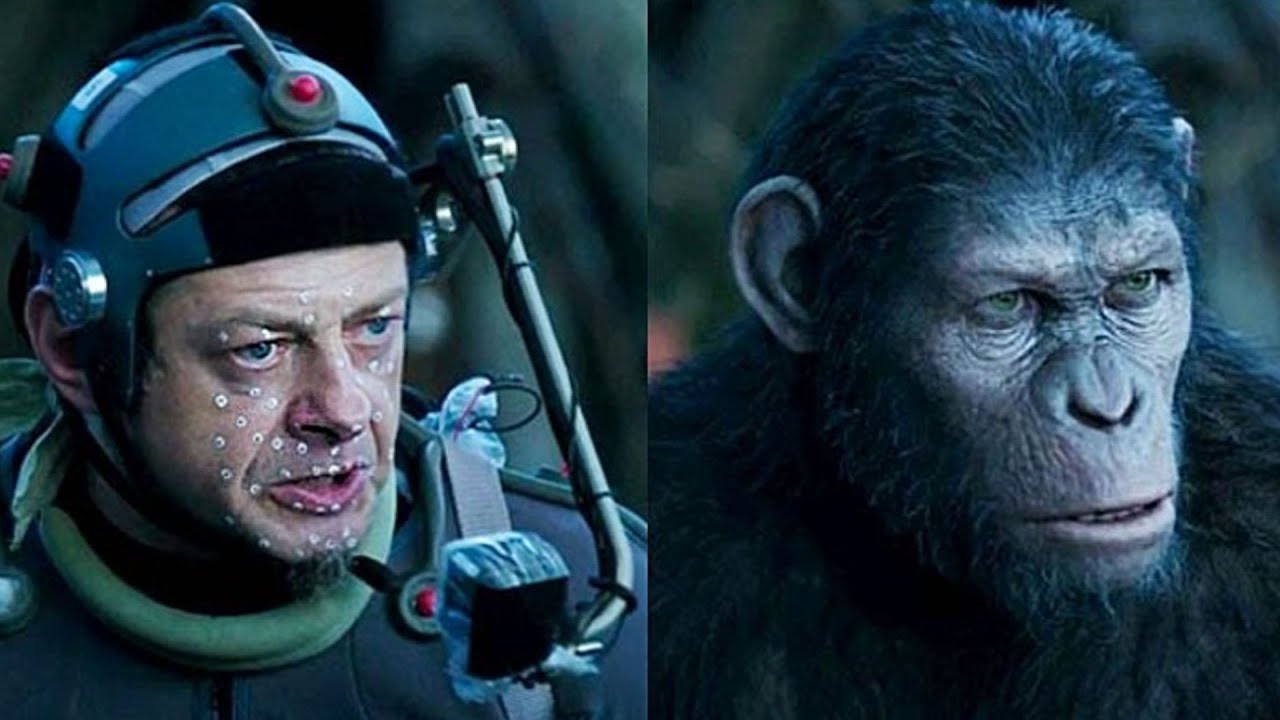 This department oversees the mechanical effects—also called practical or physical effects—that create optical illusions during live-action shooting. It is not to be confused with the Visual effects department, which adds photographic effects during filming to be altered later during video editing in the post-production process.
-
Special effects supervisor
-
-
- The special effects supervisor instructs the Special effects crew on how to design moving set elements and props that will safely break, explode, burn, collapse and implode without destroying the film set. S/he is also responsible for reproducing weather conditions and other on-camera magic.
-
-
-
Special effects assistant
-
-
-
- The SFX assistants carry out the instructions of the special effects supervisor, building set pieces like breakaway furniture and cities in miniature, lighting pyrotechnics, and setting up rigging equipment for stunts.
- Stunt coordinator
-
-
-
- Where the film requires a stunt, and involves the use of stunt performers, the stunt coordinator will arrange the casting and performance of the stunt, working closely with the director and the 1st AD.
-
Director of photography
 The director of photography, DoP or DP, is in charge of the look of the "frame" of the movie shots, hence the name "photography". He is the chief of the camera and lighting crew of the film. The DoP makes decisions on lighting and framing of shots in conjunction with the film's director. Typically, the director tells the DoP how they want a shot to look, and the DoP chooses the correct lens, filter, lighting and composition to achieve the desired aesthetic effect. The DoP is the senior creative crew member after the director.


Post-production supervisor
 Post-production supervisors are responsible for the post-production process, during which they maintain clarity of information and good channels of communication between the producer, editor, supervising sound editor, the facilities companies (such as film labs, CGI studios and negative cutters) and the production accountant. Although this is not a creative role, it is pivotal in ensuring that the film's post-production budget is manageable and achievable, and that all deadlines are met. Because large amounts of money are involved, and most of a film's budget is spent during production, the post-production period can often be difficult and challenging.

Film editor


- Sound designer
- The sound designer, or supervising sound editor, is in charge of the post-production sound of a movie. Sometimes this may involve great creative license, and other times it may simply mean working with the director and editor to balance the sound to their liking.
- Dialogue editor
- The dialogue editor is responsible for assembling and editing all the dialog in the soundtrack.
- Sound editor
- The sound editor is responsible for assembling and editing all the sound effects in the soundtrack.
- Re-recording mixer
- The re-recording mixer balances all of the sounds prepared by the dialogue, music and effects editors, and finalizes the films audio track.
- Music supervisor
- The music supervisor works with the composer, mixers and editors to create and integrate the film's music. In Hollywood a music supervisor's primary responsibility is to act as liaison between the film production and the recording industry, negotiating the use rights for all source music used in a film.
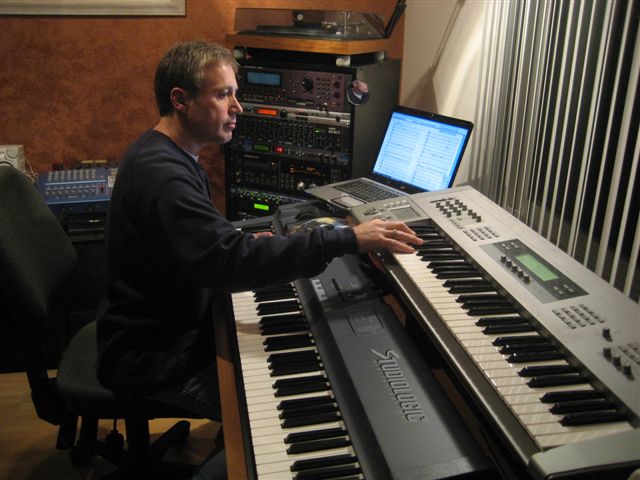
- Composer
The composer is responsible for writing the musical score for a film.
 The foley artist is the person who creates the post-sync sound effects for a film. These sound effects are recorded in sync to picture and are mostly body movements, footsteps or object manipulations. The most common reason for recording these effects live to picture is the fact that such sounds are lost when the dialogue is removed to be replaced by a foreign language version. Unsatisfactorily recorded sync sound effects can also be replaced with foley effects. Foley artists are also known as foley walkers. Foley is named after its first known practitioner, an early hollywood sound editor named Jack Foley.

Foley artist
- Conductor/ Orchestrator
- A conductor is supposed to be knowledable of special synchronization procedures to conduct the score to an orchestra. An orchestrator is someone who furthers the composer's notes and symbols and fills out the intended notation for the film score.
- Score Recorder/ Mixer
- A score's recorder is someone who recordes the film score and a score's mixer is someone who mixes the film score.
- Music Preparation
- A music preparer is someone who prepares out the score for orchestra performers and who copies out the music.
- Music Editor
- A music editor is someone who edits the film score and works with the composer to make sure it goes with the film.
- ...


Comments
Post a Comment